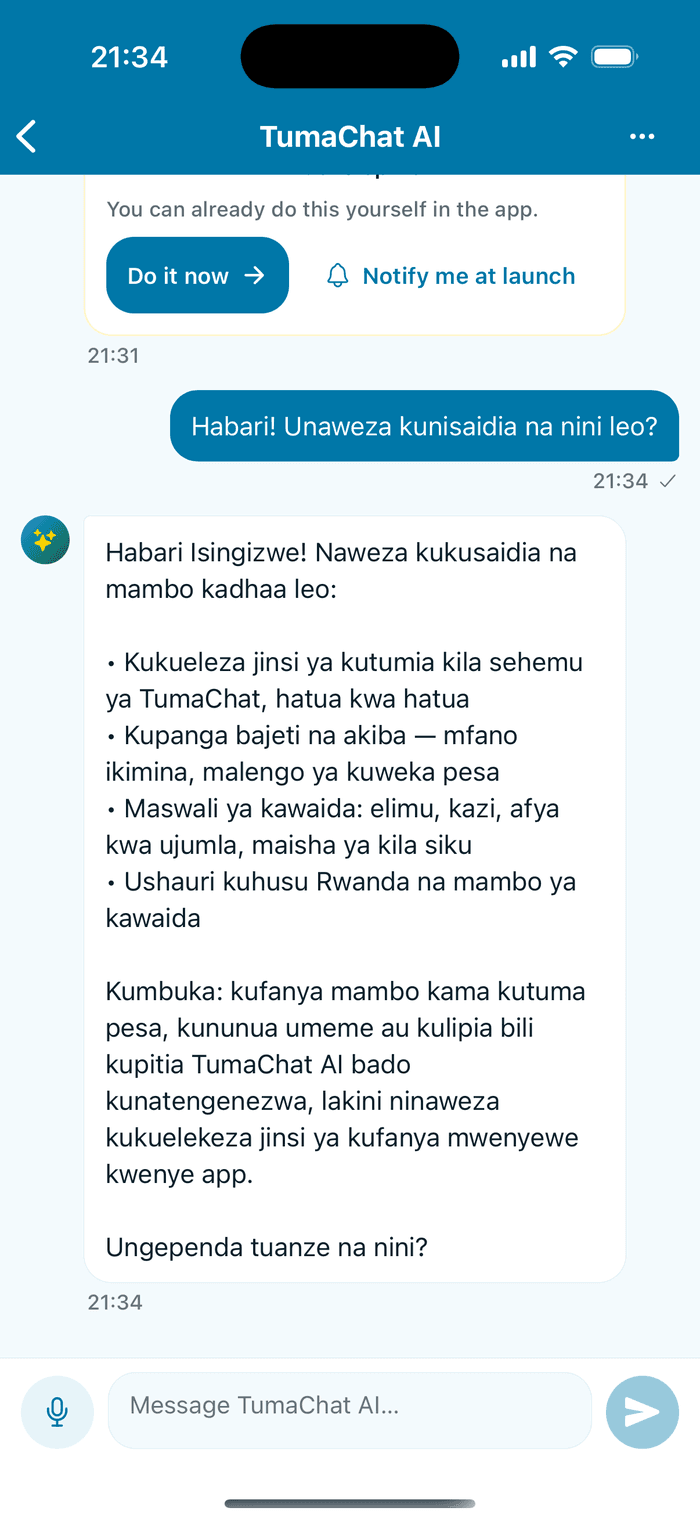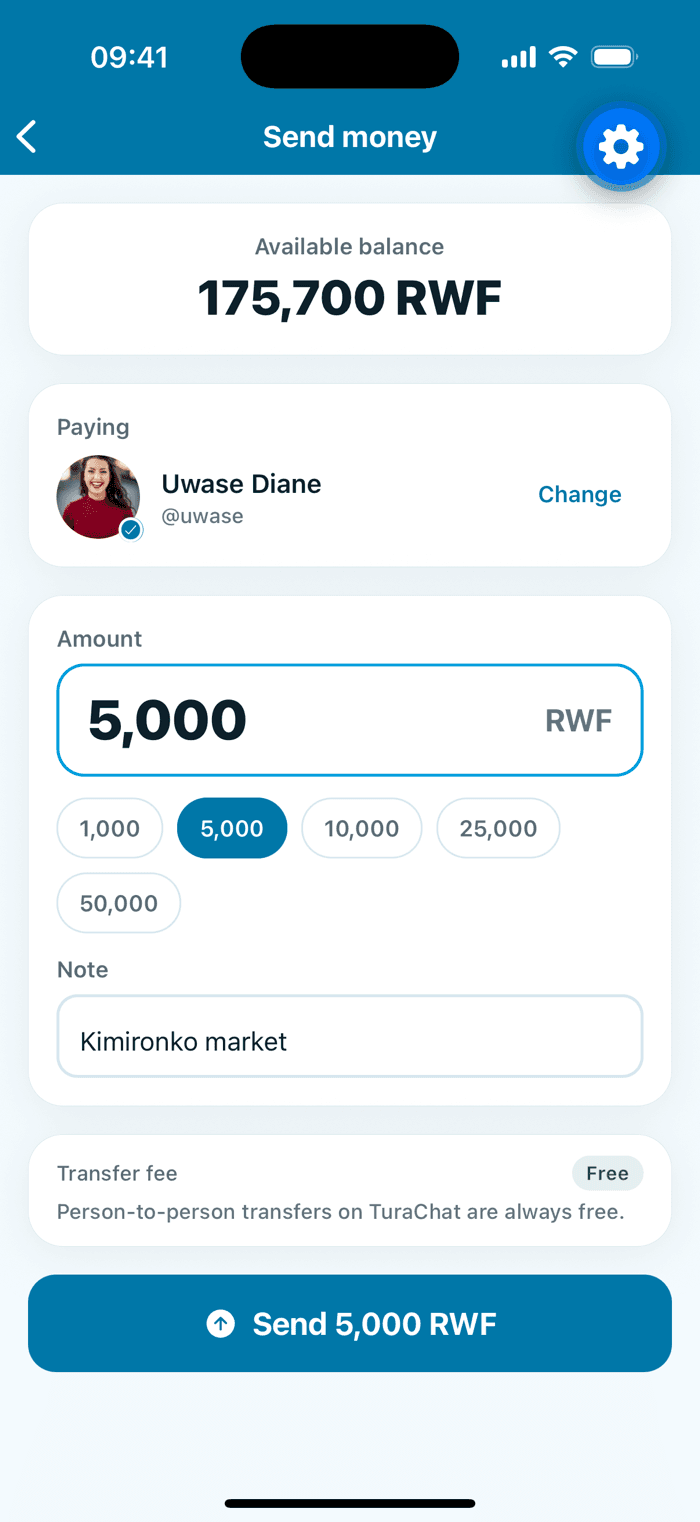
Whether you earn a monthly salary in Kigali or sell at the market every day, the money always seems to go somewhere. A budget is simply a plan that tells your francs where to go before the month starts. This guide gives you a simple method that fits life in Rwanda, with an example you can copy and adjust.
Step 1: Write down what really comes in
Start with the money you can count on each month after deductions: salary, business profit, rent you receive, or regular support from family. If your income changes from month to month, as it does for traders, moto drivers and farmers, use the amount you earn in a slow month, not a good one. Anything extra in a good month becomes a bonus for savings.
Step 2: Save first, not last
Most people try to save whatever is left at the end of the month, and usually nothing is left. Turn it around: decide your savings amount first and set it aside the day money arrives. This is exactly why ibimina work so well. When the group meets, you contribute before you spend, and the group helps you keep the promise. If you are not in a savings group yet, read how digital ibimina work.
Step 3: Cover the essentials
Next, list the costs you cannot avoid. In Rwanda these usually include:
- Rent and utilities: rent, electricity tokens and water.
- Food and household: market shopping, charcoal or gas, soap and cleaning products.
- Transport: moto, bus or fuel for getting to work, school and the market.
- Airtime and data: your bundles for calls and internet.
Step 4: Spread out the big yearly costs
Some expenses do not come every month, and they are the ones that break budgets: school fees each term, the yearly Mutuelle de santé contribution, rent paid in advance, or a family wedding. The trick is to divide them by the number of months until they are due and set that amount aside every month.
For example, if school fees of 90,000 RWF are due in three months, put away 30,000 RWF each month. When the term starts, the money is already there.
Step 5: Keep a small emergency buffer
A broken phone, a sick child or a slow week at the shop will happen. Keep a small buffer every month, even 5,000 to 10,000 RWF, so an emergency does not force you to borrow at a high cost. Over time, aim for a buffer equal to one month of essential costs.
An example: a 150,000 RWF monthly budget
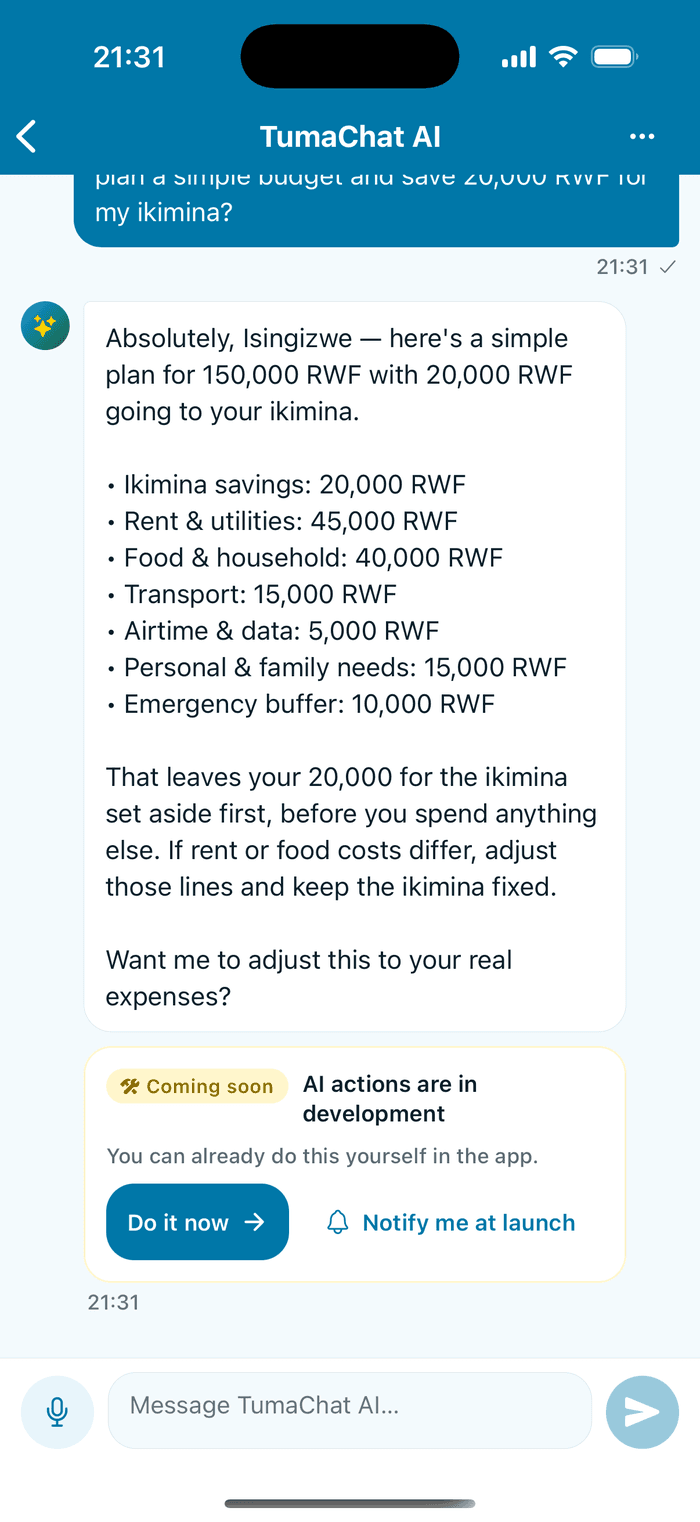
Here is the plan TumaChat AI suggested when we asked it to plan a simple budget for 150,000 RWF a month and save 20,000 RWF for an ikimina:
| Category | Amount | Share |
|---|---|---|
| Ikimina savings (first!) | 20,000 RWF | 13% |
| Rent and utilities | 45,000 RWF | 30% |
| Food and household | 40,000 RWF | 27% |
| Transport | 15,000 RWF | 10% |
| Personal and family needs | 15,000 RWF | 10% |
| Emergency buffer | 10,000 RWF | 7% |
| Airtime and data | 5,000 RWF | 3% |
| Total | 150,000 RWF | 100% |
If your rent or food costs are higher, reduce personal spending first and protect the savings and the buffer. If you have a big yearly cost coming, add a line for it and take the amount from personal spending.
English: a monthly budget

The Pay hub
Let TumaChat AI build your budget
You do not need a spreadsheet. Open TumaChat, tap TumaChat AI at the top of your chats, and ask in your own language, for example:
- “Plan a monthly budget for 200,000 RWF. Rent is 60,000 and I want to save 25,000.”
- “Mfasha gutegura ingengo y’imari y’ukwezi ku mafaranga 120,000.”
- “Aide-moi à économiser 300 000 RWF pour les frais scolaires d’ici janvier.”
The assistant answers with a clear plan and adjusts it when you tell it what is different in your life. Read more about TumaChat AI.
Stick to it: three habits that help
- Check your history weekly. In TumaChat, Pay › History shows every franc in and out, so you can see where the money went.
- Pay bills on the day money arrives. Electricity, water and TV are all in Pay › Pay bills.
- Make savings automatic and social. An ikimina with friends or colleagues turns saving into a promise you keep together.