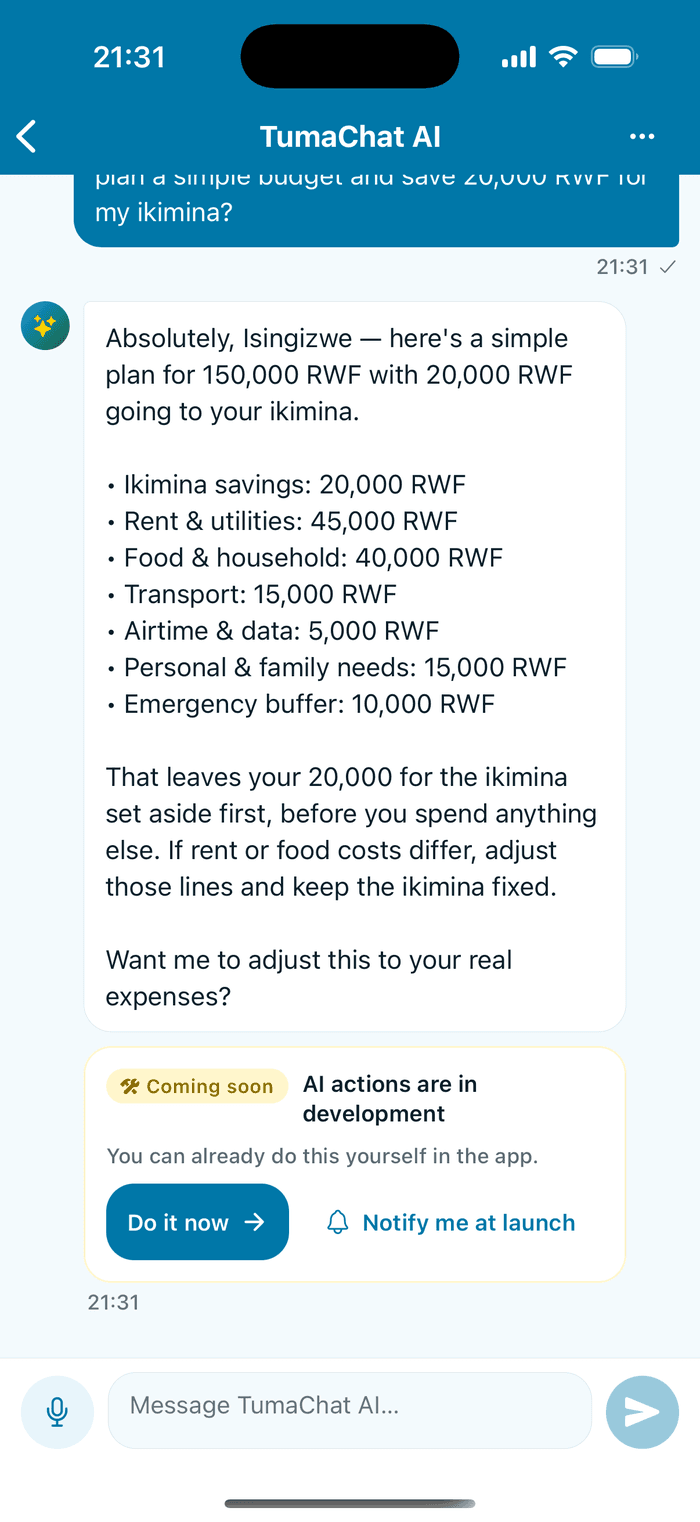
An ikimina (plural ibimina) is a group of people who save together. Each member contributes the same amount every round, weekly or monthly, and the pot goes to one member at a time until everyone has had a turn. According to FinScope Rwanda 2024, roughly half of Rwandan adults save this way. It works because it is built on trust and on friends holding each other to a promise.
But the tools most groups use are a notebook, a phone calculator and a lot of cash. That is where problems start.
Common problems with paper ibimina
- Lost or damaged notebooks. One spilled cup of tea and months of records are gone.
- Disputes about who paid. “I paid last week” is hard to prove without a clear record.
- Cash risk. The treasurer carries a lot of money between meetings.
- Members far away. A member who moved to another district or travels for work struggles to contribute on time.
- No history. Years of disciplined saving leave no record that could help a member later.
How a digital ikimina works in TumaChat
TumaChat treats ibimina as a core feature, not an extra. Open Pay › Ibimina (or Me › Ibimina) and you will see all your circles in one place.

Ibimina: your circles

Chats

The Pay hub
- Create the circle. Tap Create group, give it a name, for example “Twiyubake Women Circle”, and set the contribution per round.
- Invite members. Add friends from your TumaChat contacts. Each member sees the same circle, the same pot and the same history.
- Contribute. Members tap Contribute, confirm, and the money goes into the group pot. Every contribution is timestamped and shows who paid.
- Follow progress. The circle shows how much has been collected this round, the total in the group pot, and who receives the next payout and when.
- Release the pot. When the round is complete, the organiser taps Release pot. The money goes to the next member and the queue moves on.
Your group can also have its own chat in TumaChat, so reminders, questions and the money all stay in one app.
Why the money is held in escrow
In TumaChat, the group pot is not just a number in someone’s notebook or someone’s personal wallet. It sits in a protected escrow account until it is paid out, and every movement is written into a double-entry ledger, the same accounting principle banks use. Nobody can quietly edit a balance. Read more about how TumaChat handles money.
Tips for a strong savings group
- Agree on the rules in writing: the contribution amount, the day it is due, the payout order and what happens if someone is late. Pin the rules in the group chat.
- Keep the group a manageable size. Ten to twenty members is easier to manage than fifty.
- Choose the payout order fairly, for example by drawing lots at the first meeting, and record it.
- Plan for emergencies. Some groups keep a small social fund to help a member in difficulty.
- Keep meeting. A digital record does not replace the trust and friendship of meeting in person. It just removes the arguments about numbers.
Who can use digital ibimina?
Any group that saves together: women’s circles, groups of colleagues, church and youth groups, market vendors on the same street, or families saving for a wedding. It also works well for members who live in different towns, because contributing no longer depends on attending a meeting with cash.
What is the difference between an ikimina and a SACCO?
An ikimina is an informal group of people who save together and take turns receiving the pot. A SACCO is a registered savings and credit cooperative that offers accounts and loans. Many people use both.
Who controls the payout?
The organiser releases the pot to the next member in the queue, and every member can see who is next and when.
Can I be in more than one circle?
Yes. All your circles appear under My groups in the Ibimina section.